
Okay, so check this out—I’ve been noodling around Solana explorers for years, and some things still surprise me. Wow!
Solana moves fast. Really fast. Transactions pile up, programs call other programs, and sometimes my wallet’s balance does a little dance that I didn’t expect. Whoa!
At first glance a tx (that’s shorthand for transaction) looks like a cryptic blob: signature, slot, status. My instinct said “ignore it”, but then I dug in. Initially I thought a failed tx was always obvious, but then I realized that “failed” can hide in inner instructions and logs—so you have to read deeper.
Here’s the thing. If you want to be confident about what’s happened on-chain—whether you sent SOL, minted an NFT, or interacted with a DeFi pool—you need an explorer that shows instruction-level detail, logs, and decoded program calls. Hmm… this part bugs me when explorers oversimplify.
Why an explorer matters (and how I read a transaction)
Start with the signature. The signature is the single-source identifier for a tx. Paste it in an explorer search bar and you’ll get the full history. Then check status: success or failure. Next, check block/slot and timestamp to anchor the event in time—this is great for audits or disputes. On one hand it’s simple; on the other hand, the interesting stuff lives in “logs” and “inner instructions”.
Look at the fee payer field. Yep, fees can be covered by a third party. That matters when you’re analyzing who really paid for something. Also check balance deltas. That tells you moves of SOL across accounts, including rent-exempt deposits, which are easy to miss if you’re scanning too fast.
Programs matter a lot. If a tx touched Serum, Metaplex, or a custom program, the explorer should decode those instructions. If it doesn’t, you have to interpret raw data—annoying and error-prone. I’m biased, but decoded instructions save a ton of time and reduce dumb mistakes.
Pro tip: when you see “invoke” lines, follow them. They’re cross-program invocations (CPI). Those are often where the surprising behavior hides—token burns, wrapped SOL unwraps, or unexpected transfers within a complex swap. Really?
Solscan and practical navigation
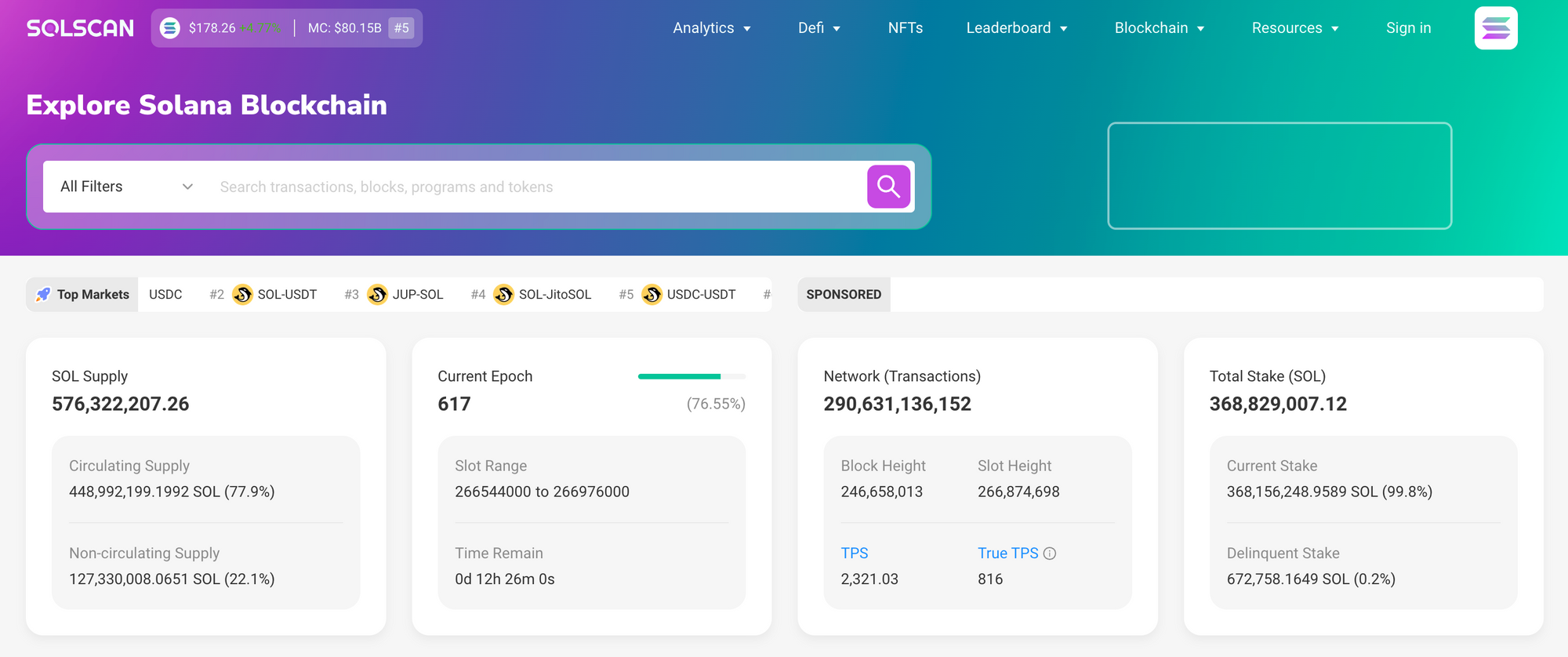
Okay, so check this out—if you want a fast, user-friendly view of Sol transactions I often land on the solscan explorer official site. It gives a clear transaction timeline, decoded instructions, token movements, and sometimes metadata like NFT details. At least, that’s been my experience.
Search by address to see account activity. Short story: accounts tell you who interacted with what. Then switch to “Token Transfers” to isolate SPL token flows, which are separate from native SOL transfers. Watch for unusual amounts because token decimals matter—a transfer of “100” could be 100 tokens or 0.000000100 depending on decimals. I learned that the hard way.
Filters are your friend. Want only failed txs, or only txs that invoked a particular program? Apply filters. It speeds investigations and keeps you from scrolling forever. Also, export tools (CSV/JSON) help if you’re building a timeline for someone else.
One annoying thing: clones and phishing sites. Always double-check the URL. I’m not 100% sure of every mirror out there, and neither should you. Trust but verify—especially when clicking “Connect Wallet” buttons from links embedded in chats.
Interpreting logs and inner instructions
Logs are the narrative. They often contain program messages, custom event prints, or errors. Read them. If a tx says “Program failed to complete: Custom error 0x1” you need the program’s error map to decode it. On one hand, that’s tedious… though actually it’s essential for debugging smart contract interactions.
Inner instructions show where value moved behind the scenes. For example, a swap may move USDC to a pool, mint LP tokens, then send SOL to a wrapped account and finally unwrap it. That whole chain shows up as a set of inner instructions. If you only looked at top-level transfers you’d miss most of the action.
Also pay attention to “PostBalances” and “PreBalances”. They reveal rent changes and lamport movements that aren’t obvious in transfer logs. My instinct said “ignore balances”, but once I started comparing pre/post it became obvious when accounts got funded for rent-exempt status.
Token and NFT checks
Want to validate an NFT mint? Check the token’s mint address, metadata link, and token holders. Verifiable metadata and on-chain creators are key signals. Sometimes marketplaces show art, but the on-chain metadata is the canonical source. I’m biased toward on-chain truth—much prefer it over screenshots and tweets.
Token holder lists can help spot concentration risk. If one address holds 90% of supply, that’s a red flag. Also watch for one-time mint authorities that later renounced—good sign—or for authorities that still have power to mint more, which is less comforting.
APIs, rate limits, and building tools
Explorers often provide APIs. Use them for batch queries—like pulling transaction histories for multiple addresses. But respect rate limits. If you’re scraping lots of data, cache aggressively and plan retries. Hmm, somethin’ to plan for when building analytics tools.
If you need official verification for legal or compliance reasons, cross-check: Solscan vs. Solana Explorer vs. RPC nodes (getConfirmedTransaction, getParsedTransaction). Different sources can reveal subtle differences in decoding or timing. Initially I trusted one, then learned to triangulate.
FAQ
Q: How do I tell if a transaction failed?
A: Check the status field first. Then read logs and inner instructions for errors. Failed txs often include program error messages in logs—those are the most informative bits.
Q: Can I trust the explorer’s decoded instructions?
A: Mostly yes, but decoding can vary by explorer and version. If something looks off, compare the raw instruction data with program docs or the on-chain program ID. Double-check with another explorer or a direct RPC call.
Q: What’s the best way to verify an NFT’s authenticity?
A: Inspect the mint address, verify on-chain metadata and creators, and check ownership history. If the metadata points to off-chain storage, consider the risks of mutable content—some projects update metadata post-mint.